Choosing between asphalt vs. concrete parking lots is one of the biggest construction decisions commercial property owners face. While asphalt typically offers a lower upfront cost, faster installation, and easier repairs, concrete may provide a longer potential service life and stronger performance under heavy loads.
For New Jersey commercial properties, factors like freeze-thaw cycles, road salt exposure, drainage, traffic volume, and long-term maintenance expectations all play a role. In this guide, our team at EB Paving will go over how each material performs to help you make the right investment for your property.
Asphalt vs. Concrete Parking Lot: Quick Comparison
| Factor | Asphalt | Concrete |
|---|---|---|
| Installation Cost | Typically lower upfront cost | Higher upfront cost |
| NJ Freeze-Thaw Performance | Flexible and performs well when maintained | More susceptible to cracking from frost movement |
| Maintenance Frequency | Requires routine maintenance | Typically lower routine maintenance |
| Repair Costs | Lower; patching and resurfacing available | Higher; repairs are more labor-intensive |
| Heat Performance | Can soften under extreme heat | More stable in high heat |
| Resurfacing/Overlay | Can be milled and overlaid | More limited repair options |
| Typical NJ Use Case | Retail, office, industrial, multi-family lots | Heavy truck areas and high-load applications |
| Lifespan | Long-lasting with proper maintenance | Potentially longer lifespan with proper maintenance |
Bottom line: For many NJ commercial parking lots, asphalt is often the more practical choice because it offers lower upfront costs, easier repairs, and faster installation. However, concrete may make more sense for heavy-load applications.
What Is Asphalt Paving?
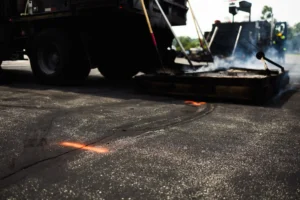
Asphalt is a mixture of aggregate and asphalt binder that is installed hot and compacted into a smooth, durable surface. In commercial applications, asphalt is widely used because it can often be installed and reopened to traffic faster than concrete.
When comparing concrete vs asphalt paving, asphalt’s biggest advantages are lower upfront costs, faster installation, and easier repairs. These benefits are especially valuable in New Jersey, where freeze-thaw conditions can create ongoing maintenance needs.
Asphalt Maintenance Requirements
Routine maintenance helps maximize asphalt lifespan and performance. This typically includes:
- Crack filling to reduce water infiltration
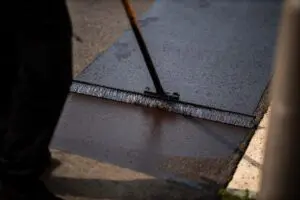
- Sealcoating to protect against oxidation, UV exposure, and spills
- Periodic resurfacing through milling and overlays
What Is Concrete Paving?
Concrete parking lots use Portland cement, aggregate, and water to create a rigid pavement structure. The material is poured into forms, finished, jointed, and allowed to cure before opening to traffic.
When evaluating concrete vs asphalt paving, concrete’s primary strengths include heavy-load capacity, lower routine maintenance requirements, and potential long-term durability. This material also reflects more light than asphalt, which may help improve visibility and reduce lighting requirements on some commercial properties.
Concrete Maintenance Requirements
Concrete generally requires less routine maintenance than asphalt, but it is not maintenance-free. Property owners may need to address:
- Joint deterioration
- Surface spalling
- Cracking
- Localized panel replacement
Cost & Long-Term Value: Asphalt vs. Concrete Parking Lot
For most commercial property owners, cost is a major factor in the asphalt vs concrete parking lot cost analysis. The exact cost for both depends on the size of your lot, the materials used, and the complexity of the project.
| Cost Factor | Asphalt | Concrete |
|---|---|---|
| Upfront Installation Cost | Typically lower than concrete, making it attractive for larger parking lots and budget-conscious projects | Typically higher upfront cost |
| Routine Maintenance | Generally requires more routine maintenance, including crack filling and sealcoating | Often requires less routine maintenance |
| Repair Costs | Typically less expensive to repair | Can be more expensive to repair when problems occur |
When evaluating long-term value, it’s important to look beyond initial installation costs. Traffic volume, ownership timeline, maintenance expectations, repair needs, and site conditions all play a role in determining whether asphalt or concrete provides the better return on investment for your property.
Planning a paving project? Use our asphalt cost calculator to estimate material quantities and help budget for your commercial parking lot project.
Maintenance & Durability in New Jersey's Climate
New Jersey weather creates challenges for both materials. Freeze-thaw cycles, heavy rainfall, and seasonal temperature swings can impact performance and maintenance needs over time.
| Climate Factor | Asphalt | Concrete |
|---|---|---|
| Freeze-Thaw Cycles | Flexible surface better accommodates seasonal movement when maintained | More rigid; water intrusion and joint failures can contribute to cracking |
| Road Salt | Cracks can allow water intrusion and freeze-thaw damage; crack filling and sealcoating help reduce risk | Can experience scaling, surface deterioration, and chloride-related damage over time |
| Summer Heat | May soften in high-stress areas such as loading docks, dumpster pads, truck turning areas, and bus stops | Generally performs better under concentrated loads during extreme heat |
| Best Use | Works well for most parking areas | Often used in high-stress areas or as part of a hybrid design |
Regardless of the material, proper drainage design and base preparation are critical for preventing water infiltration, pavement instability, and premature surface failure.
Pros and Cons
Both asphalt and concrete offer distinct advantages and drawbacks for parking lot construction. Understanding the key differences can help property owners choose the option that best fits their budget, maintenance expectations, and long-term goals.
Asphalt Parking Lots
Pros
- Lower upfront cost
- Faster installation
- Easier repairs
- Resurfacing options available
Cons
- Requires routine maintenance
- Can soften in extreme heat
- Petroleum-based pricing fluctuations
Concrete Parking Lots
Pros
- Strong under heavy loads
- Stable in high heat
- Lower routine maintenance needs
- Potentially longer service life
Cons
- Higher installation cost
- Longer construction timeline
- More expensive repairs
- Limited resurfacing options
Which Parking Lot Material Should You Choose?
When deciding between asphalt and concrete for a parking lot, the right choice depends on your budget, traffic demands, maintenance expectations, and long-term ownership goals.
Go with asphalt if:
- You want lower upfront installation costs
- You need faster project completion and quicker access to the parking lot
- You prefer easier and typically less expensive long-term repairs
- You are paving a retail center, office park, apartment complex, or multi-family property
Go with concrete if:
- Your property experiences frequent heavy truck traffic
- You require exceptional load-bearing capacity
- You have a longer ownership horizon and can accommodate a higher upfront investment
- Long-term durability is a primary consideration for your site
If you’re choosing between concrete and asphalt for your parking lot, EB Paving provides paving services throughout New Jersey for commercial properties of all sizes. Our team will go over your options and help you choose the right material for your next paving project.
Contact our team today to find the right parking lot solution for your property and get a free estimate.
Frequently Asked Questions
Asphalt is typically less expensive to install than concrete, especially for larger commercial parking lots.
A properly installed and maintained asphalt parking lot can last for many years. Longevity depends on drainage, traffic loads, crack filling, and routine maintenance.
Many commercial property owners choose asphalt because its flexibility and repairability are well-suited to New Jersey’s freeze-thaw environment.
Yes. Many commercial properties use asphalt for the primary parking area and concrete in high-stress locations such as loading docks, dumpster pads, and truck turning zones.