Industry parking lot design guidance often uses a 15-year design life for asphalt pavement. But in New Jersey, harsh winters, freeze-thaw cycles, and heavy traffic can shorten that lifespan.
If your lot is aging, worn, or damaged, you may be wondering whether to repair or replace it. Small issues can quickly turn into major damage, and knowing when to move from repairs to full repaving can save you time, money, and ongoing headaches.
At EB Paving, we’ve spent over 15 years helping New Jersey businesses make the right call. Below are seven clear signs your parking lot needs repaving.
Not sure if your parking lot needs repairs or full repaving? Contact EB Paving for a professional assessment.
Understanding Parking Lot Deterioration in New Jersey
New Jersey’s freeze-thaw cycles accelerate asphalt breakdown. However, not all damage means you need a full replacement. Some issues can be fixed with maintenance, while others point to deeper structural problems.
If you’re facing ongoing parking lot repairs, a full replacement may be the more cost-effective option over time.
How New Jersey Weather Impacts Asphalt
New Jersey’s climate can take a serious toll on asphalt surfaces. Regular parking lot maintenance helps protect your pavement from common weather-related damage, including:
- Freeze-thaw cycles that expand and worsen cracks
- Salt and de-icing chemicals that break down the surface
- Heavy rain that threatens soil stabilization
Traffic Load Considerations for Commercial Properties
Daily traffic puts continuous stress on your parking lot, accelerating wear over time.
- High-traffic properties deteriorate more quickly.
- Delivery trucks and service vehicles add significant weight.
- Frequent turning and stopping create pressure points.
The 7 Warning Signs Your Parking Lot Needs Full Repaving
Here are key warning signs your parking lot needs repaving instead of commercial parking lot repairs:
1. Extensive Cracking
Isolated or minor cracks can be fixed with targeted repairs. However, cracks that are wide or have spread across the surface mean that the base is failing.
In these cases, crack filling is no longer the practical or cost-effective option. Instead, repaving is necessary to restore safety and avoid liability concerns.
2. Multiple Potholes and Failed Previous Repairs
One pothole isn’t a big deal, but repeated problems are a red flag. Potholes that keep coming back or repairs that fail quickly usually mean the base is breaking down.
At this point, patching is a temporary fix and often more expensive over time than repaving. Uneven surfaces can also create safety and ADA compliance issues.
3. Drainage Problems and Standing Water
Water is one of the most common causes of pavement damage. Poor drainage can quickly accelerate deterioration and weaken the foundation.
Watch for:
- Standing water after rain
- Low spots or pooling
- Water collecting near drains
4. Faded or Completely Worn Line Striping
If your pavement striping doesn’t last after repainting, the pavement may be too worn. This means that the paint can no longer stick to the asphalt, and this poor visibility creates safety and ADA compliance risks.
5. Significant Settling and Uneven Surfaces
Uneven pavement usually points to issues below the surface, such as subgrade failures. This not only creates hazards for pedestrians and vehicles, but it also makes snow removal and routine maintenance more difficult.
6. Age-Related Deterioration
Most parking lots last 15 to 20 years. Once a pavement hits that 15-year mark, it becomes more prone to cracking, potholes, and drainage issues.
7. Recurring Maintenance Costs Exceeding 30% of Replacement
Rising repair costs are one of the clearest signs it’s time to repave. Look for:
- Ongoing repairs that add up quickly
- Costs approach or exceed 30% of the cost for a full replacement
- Fixes become short-term instead of long-term solutions
At this point, parking lot repairs are no longer cost-effective. A full repaving project often provides better value and longer-lasting results.
When to Call EB Paving for a Parking Lot Assessment
If you’re seeing multiple warning signs that your parking lot needs repaving, it’s time to bring in a professional.
At EB Paving, we provide a free consultation to help you understand the true condition of your parking lot. We assess the full structure to determine if repairs are still effective or if repaving is the better option.
We also adhere to industry pavement maintenance standards and provide clear documentation to support property management, budgeting, and insurance requirements.
Our Comprehensive Evaluation Process
Our comprehensive evaluation includes:
- Visual inspection: Identify cracks, potholes, surface wear, and high-risk areas
- Subgrade evaluation: Check for underlying instability or structural failure
- Drainage assessment: Pinpoint areas where water is causing damage
This process allows us to recommend the right solution based on long-term performance, not just short-term fixes.
Getting Your Free Estimate
When you’re ready to move forward, we keep the estimate process simple and transparent. Our team will:
- Review site size, layout, and current condition
- Provide a clear timeline and scope of work
- Deliver a detailed proposal with recommended solutions
We’ll also help you plan around seasonal conditions, so your project stays on schedule and avoids weather-related setbacks.
Repair vs. Replace: Making the Right Decision
Not sure whether to repair or replace your pavement? Deciding between a repair and a replacement comes down to the level of damage and the costs.
A simple way to evaluate your parking lot:
- Minor, isolated damage → repairs are usually enough
- Widespread or recurring issues → replacement is often the better investment
For property managers, the key is balancing short-term costs with long-term performance. A clear cost comparison can help you avoid overspending on repairs that won’t last.
Minor Repairs That Extend Lifespan
If your lot is still structurally sound, targeted asphalt parking lot repairs can extend its life. This might include:
- Crack filling: Seals small cracks to prevent water intrusion and further damage
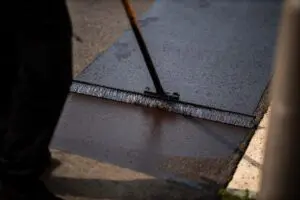
- Sealcoating: Protects the surface from weather, traffic, and oxidation when done on a regular schedule
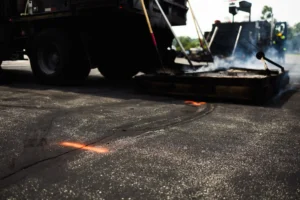
- Infrared patching: A cost-effective solution for isolated damage that blends new and existing asphalt
With proper maintenance scheduling, these repairs can delay the need for full repaving and help manage costs over time.
When Full Repaving Is the Only Solution
Repaving is necessary when the overall structure of your pavement has failed. Alligator cracking, widespread settling, or repeated potholes can point towards subgrade failures and foundation issues. These uneven surfaces can put pedestrians and vehicles at risk and create compliance issues for your property.
If your parking lot has sustained extensive damage, repairs only provide temporary relief and may lead to ongoing costs.
New Jersey Repaving Process and Timeline
Repaving a commercial parking lot requires careful planning, especially in New Jersey’s climate. At EB Paving, we manage the full repaving process while helping you plan around seasonal timing, local requirements, and business operations.
Pre-Construction Planning
Before work begins, we prepare the site and minimize disruptions.
- Site preparation: Clear the area and address existing surface issues.
- Utilities coordination: Identify and protect underground utilities.
- Temporary access: Plan parking and traffic flow to keep your business accessible.
- Weather planning: Account for New Jersey’s changing conditions to avoid delays.
This phase ensures your project starts smoothly and stays on track.
Construction Timeline and Phases
Once construction begins, your project follows a clear, step-by-step timeline based on the size and condition of your parking lot. Smaller lots may take a few days, while larger commercial properties can take several days to a couple of weeks, depending on the scope.
- Subgrade preparation: The existing surface is removed, and the base is inspected, repaired, or stabilized to ensure long-term performance
- Base installation: We build a strong foundation to support the new asphalt and prevent future issues
- Final paving: Our team installs new asphalt and compacts it for a smooth, durable surface
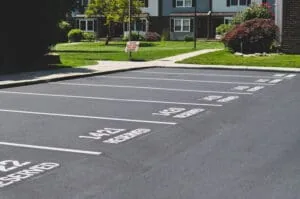
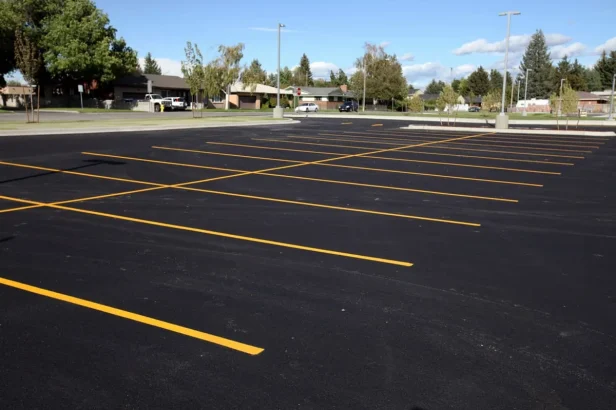
- Striping and layout: Once the asphalt has cured, we complete final striping for traffic flow, safety, and ADA compliance
If you’re unsure whether your parking lot needs repaving or you’re looking for reliable maintenance, our team at EB Paving is here to help. We offer a full range of commercial paving solutions to meet all your paving needs.
Frequently Asked Questions
With proper maintenance, a commercial parking lot lasts 15 to 20 years. However, New Jersey’s freeze-thaw cycles and heavy winter weather often reduce this to 12 to 15 years without regular sealcoating and crack repairs.
Parking lot resurfacing adds a new asphalt layer over existing pavement, while full repaving removes old asphalt and rebuilds from the subgrade up. Full repaving is required when the base is compromised.
Costs vary by pavement size and condition, but they typically range from $3 to $7 per square foot. We provide free estimates based on specific site conditions and requirements.