Your parking lot is an extension of your business, a visual declaration to your staff and customers that you take your reputation—and their safety—seriously.
Most commercial property owners and facility managers in New Jersey understand the importance of parking lot maintenance. After all, parking lot failures are preventable, and the number one cause of costly repairs and premature asphalt replacement is neglect.
In this parking lot maintenance guide, we outline proactive steps you can take to keep your high-traffic areas functional and safe, including assessing your lot’s condition, creating a seasonal maintenance schedule, and identifying when it’s time to call in the professionals. Follow this parking lot maintenance checklist, and you’ll be able to save yourself time and money on critical pavement upkeep.
Why Parking Lot Maintenance Matters for Commercial Properties
Failing to maintain your parking lot can lead to serious legal and financial consequences. Here are the top reasons why commercial parking lot maintenance should be a priority for every property owner and facility manager:
Safety and Liability
Beyond the eyesore, cracks, potholes, and faded striping pose significant safety risks. Poorly maintained parking lots can lead to accidents, injuries, and even lawsuits. Regular maintenance, such as crack filling and pothole repair, can help mitigate liability risk and protect your property.
Curb Appeal and First Impressions
Your parking lot is often the first thing visitors, tenants, and customers see when they arrive at your property. A well-maintained lot conveys that your business is professional, organized, and attentive to detail. On the other hand, a neglected parking lot can send the message that you are careless, which could hurt your business reputation and negatively impact customer or tenant retention.
Asset Protection
A well-maintained asphalt parking lot can last 25–30 years. However, neglecting maintenance can cause significant deterioration and shorten the expected lifespan to under 15 years. Routine sealcoating and pothole repairs extend the life of your parking lot, protecting your investment and reducing the need for costly, full-scale repairs.
How to Assess Your Parking Lot's Condition
Regular pavement condition assessments are crucial for identifying potential issues before they become major problems. We recommend performing bi-annual inspections—once in the spring, right after the freeze-thaw cycle, and again in the fall before winter.
Here’s what we look for during each parking lot inspection:
Surface Cracking
Cracking is one of the most common issues in parking lots. There are different types of cracks, each requiring specific treatments:
- Hairline/Surface Cracks: These are minor cracks that can usually be treated with crack filling. They don’t extend deep into the pavement and are primarily a cosmetic issue.
- Alligator Cracking: This type of cracking indicates structural failure and requires more extensive repairs, such as patching or full-depth replacement.
- Edge Cracking: Occurs along the edges of the lot and can be caused by poor drainage or erosion. This may require edge repair or surface patching.
Oxidation and Surface Deterioration
Asphalt oxidation occurs when ultraviolet (UV) rays break down the asphalt binder, causing the surface to fade and become brittle. Over time, this can lead to cracks and other forms of deterioration.
If you notice that the asphalt has turned gray and faded, it’s time to sealcoat the surface. This protective treatment helps restore the asphalt and prevent further damage.
Potholes and Depressions
Potholes are caused by water infiltration, freeze-thaw cycles, and heavy traffic. If not addressed promptly, they can cause vehicle damage, leading to liability issues.
Pothole repair and asphalt patching prevent base failure, protecting your visitors and their vehicles.
Faded Striping and Pavement Markings
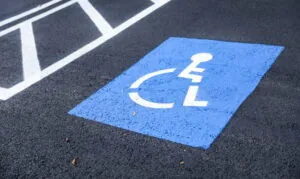
The Americans with Disabilities Act (ADA) requires a clear designation for accessible parking spaces. Faded striping and pavement markings make it difficult to find these spaces and compromise your ADA compliance.
Regularly inspect your striping and restripe your parking lot every 1–3 years, or after sealcoating.
The Commercial Parking Lot Maintenance Checklist
Here are the five core services that should be part of your parking lot maintenance checklist:
Crack Filling and Crack Sealing
Crack filling and crack sealing are vital to maintaining your parking lot’s integrity. Crack filling is ideal for non-moving cracks, while crack sealing is used for cracks that expand and contract with temperature changes.
The best practice is to use rubberized hot-pour sealant, which effectively prevents water from infiltrating the subgrade and causing further damage. Crack filling should be done annually or as part of your pre-winter maintenance.

Parking Lot Sealcoating
Sealcoating your parking lot protects the surface from the damaging effects of UV rays, moisture, oil, and chemicals. Sealcoat every 2–3 years, preferably during warmer months when temperatures consistently exceed 50°F.
Parking lot sealcoating should be performed after crack filling, and it is not a substitute for this essential step.
Pothole Repair and Asphalt Patching
Parking Lot Striping and Pavement Markings
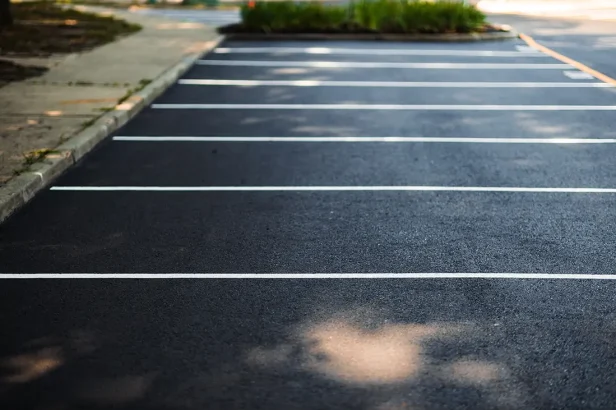
Faded or missing pavement markings can cause confusion and increase the risk of accidents. Regularly check and restripe your ADA spaces, crosswalks, loading zones, and arrows—especially after sealcoating—as the new surface may require new markings.
For more detail on accessible spaces, crosswalks, and layout requirements, review our ADA parking requirements guide.
- ADA Compliance: Parking spaces designated for disabled drivers must be clearly marked, or you risk legal penalties.
- Traffic Flow and Safety: Parking lot striping should clearly define parking spaces, fire lanes, pedestrian walkways, and loading zones to ensure the safety of both drivers and pedestrians.
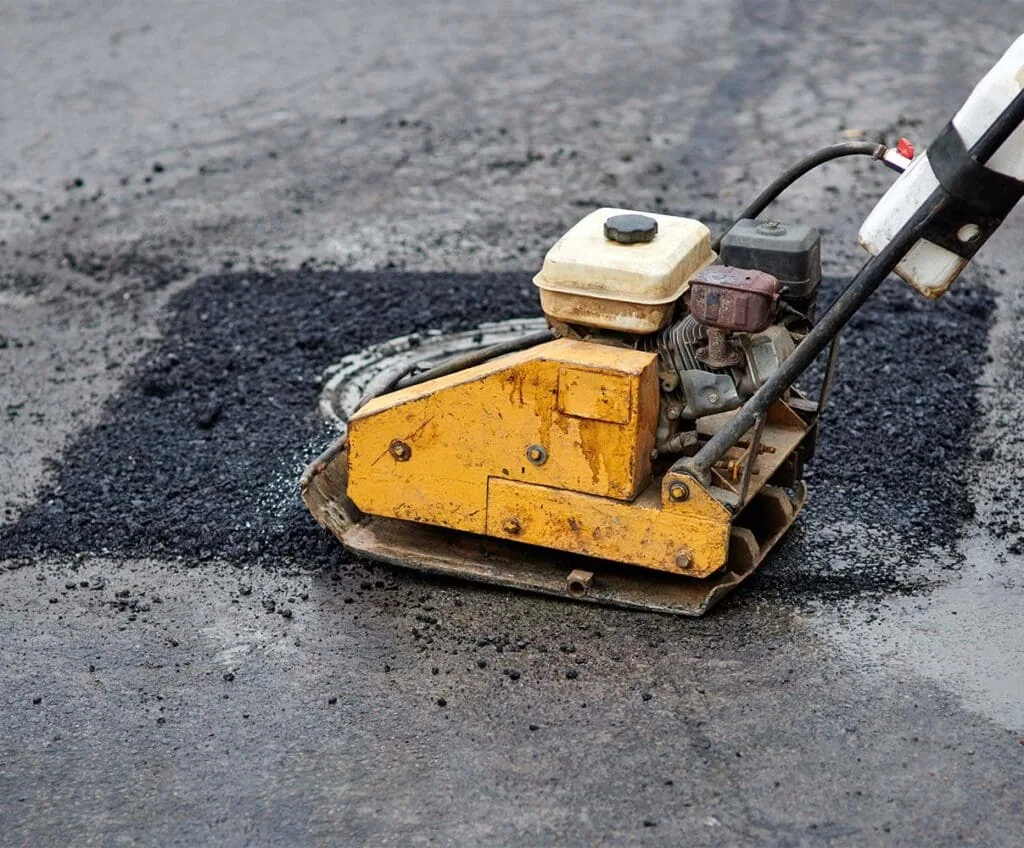
Potholes are a common problem in areas like New Jersey, where weather conditions are dynamic. They form when water seeps into cracks in the asphalt, freezes, and expands, causing the pavement to break apart.
Regular pothole repair and asphalt patching help maintain your parking lot’s integrity and prevent further damage.
- Surface Patching: A quick, cost-effective pothole repair option, best suited for minor potholes and surface-level damage.
- Full-Depth Patching: Ideal for larger or deeper potholes. It involves removing both the surface and the base layer, then replacing them with new material.
- Infrared Patching: A seamless repair method that uses heat to bond new asphalt with the existing surface. For localized damage, infrared patching is durable and can be completed quickly, making it ideal for areas with frequent traffic.
Drainage Inspection and Maintenance
Poor drainage is one of the top causes of asphalt failure. Standing water can erode the pavement, causing cracks and potholes to form faster. It’s critical to inspect your parking lot’s drainage system regularly, especially after heavy rain or snow.
- Catch Basins and Inlets: Ensure these are clear of debris and properly direct water off the lot. Schedule seasonal cleanings, particularly in the fall, to prevent leaves from clogging drains.
- Standing Water: If water remains on the surface for more than 24 hours, it’s time to call in a professional to assess the situation.
If standing water continues after storms, drainage and utility repairs may be needed before surface maintenance will hold up long term.
Parking Lot Repair: When Maintenance Isn't Enough
If you notice alligator cracking across large sections, recurring potholes, or base failures, it may be time to schedule parking lot repair.
Signs You Need Parking Lot Repair
- Alligator Cracking: Indicates structural failure and requires full-depth patching or pavement resurfacing.
- Multiple Potholes: When potholes recur or become widespread, it often indicates a base-layer issue that requires infrared patching or full-depth reclamation.
- Base Failures and Depressions: These require more than just surface-level repairs. Typically, mill and overlay or pavement resurfacing may be necessary.
- Standing Water: Standing water after cleaning signals significant issues with the drainage system or the subgrade, requiring professional repair.
Repair Options
When regular maintenance isn’t enough, the following repair methods are available:
- Infrared Patching: Ideal for minor damage and quick fixes.
- Full-Depth Reclamation: Involves pulverizing all asphalt layers to create a new base for a fresh surface.
- Mill and Overlay: Grinding down the old asphalt surface and adding a new layer through milling and reclamation when the existing pavement needs more than surface maintenance.
- Pavement Resurfacing: A cost-effective way to restore large areas of the parking lot without full replacement.
And finally, if more than 30–40% of your parking lot needs repair, it may be time to replace it altogether.
Parking Lot Maintenance Schedule: What to Do Every Season
For commercial properties in New Jersey, seasonal parking lot maintenance is particularly valuable due to the state’s freeze-thaw winters and humid summers.
Spring
- Post-Winter Inspection: Assess for cracks, heaving, and damage from freeze-thaw cycles.
- Pothole Repair: Spring is a peak pothole season, so address any issues before they worsen.
- Sweep and Clean: Remove debris from the lot to ensure proper drainage.
- Sealcoating: If it wasn’t done in the fall, schedule sealcoating for early spring when the weather warms.
Summer
- Ideal Sealcoating Time: Summer is the best time for sealcoating, as warm temperatures allow for faster drying. Pair this with restriping for an overall refreshed look.
- Crack Filling: Perform crack filling during dry conditions to prepare the lot for fall rains.
- Full Inspection: Conduct a thorough inspection to ensure everything is in good shape for the upcoming winter.
Fall
- Pre-Winter Crack Filling: Ensure cracks are sealed before freezing temperatures arrive.
- Drainage Maintenance: Clean out catch basins and ensure that all drainage systems are clear before winter.
- Inspection: Document any damage or maintenance needed for a smooth transition into winter.
Winter
- Snow Plowing: Be cautious when plowing to avoid scraping the surface and damaging sealcoating and striping.
- De-Icing: Use de-icers carefully—harsh chemicals can degrade asphalt over time.
- Document Damage: Keep track of any damage requiring repair for spring.
Preventive vs. Reactive Maintenance: The Cost Difference
One of the biggest advantages of preventive asphalt parking lot maintenance is cost savings. It helps spread costs across fiscal years, making it more affordable for property managers and HOAs to control their budgets.
Here’s a quick comparison:
| Reactive Maintenance | Preventive Maintenance |
|---|---|
| Wait for failure | Scheduled treatments |
| Emergency costs | Lower long-term costs |
| Frequent repairs | Extended pavement life |
| Increased liability | Predictable maintenance |
Start Your Parking Lot Maintenance Plan Today
Don’t wait for your parking lot to deteriorate—start a parking lot maintenance plan today to ensure your lot remains in top condition.
Eosso Brothers Paving specializes in providing comprehensive parking lot maintenance services for commercial properties across New Jersey. From crack filling and sealcoating to pothole repair and striping, we understand how to keep your parking lot safe and functional.